

Medical tourism at the National Center for Children’s Rehabilitation
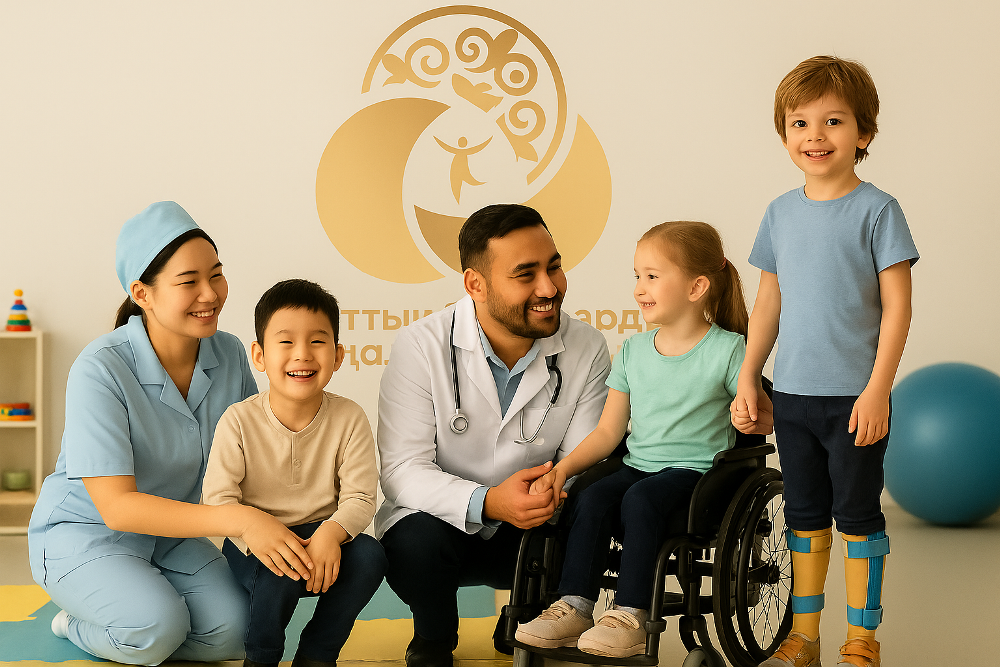
The National Center for Children’s Rehabilitation (hereinafter referred to as the Center) offers comprehensive rehabilitation programs for children aged 0 to 18 with psychoneurological disorders.
We accept patients from all regions of Kazakhstan as well as from abroad, providing a high level of rehabilitation care in comfortable conditions.
The Center was opened on September 10, 2007. Since December 2022, the Center has been under the authority of the Ministry of Health of the Republic of Kazakhstan. Our Center has repeatedly confirmed its status during scheduled periodic accreditations, demonstrating compliance with modern national and international standards of quality and safety in medical services:
- International accreditation by the Joint Commission International (JCI)
Most recent accreditation: February 24, 2024 – February 23, 2027 - Highest Category of National Accreditation
Most recent accreditation: September 8, 2023 – September 8, 2026
Our Advantages
- High level of quality and safety — our Center holds international accreditation from the Joint Commission International (JCI), which confirms compliance with all modern standards and protocols for providing rehabilitation care.
- Three areas of multidisciplinary rehabilitation (Medical Rehabilitation, Psychological and Pedagogical Correction, Social Adaptation) using innovative methods and modern equipment (Table 1).
|
№ |
|
Name of Technology/Service |
Brief description |
|
1 |
Medical Rehabilitation |
Dynamic Proprioceptive Correction (DPC) Method |
A modern rehabilitation technology aimed at restoring motor functions in children and adults with neurological and orthopedic disorders. |
|
2 |
Biofeedback (BFB) Rooms |
The patient receives real-time visual or auditory feedback about their body’s functioning (breathing, heart rate, muscle tension, brain activity, etc.). |
|
|
3 |
Transcranial Magnetic Stimulation (TMS) |
This is a non-invasive neurorehabilitation method in which specific areas of the brain are stimulated using magnetic impulses, promoting the recovery of cognitive and motor functions, reducing spasticity, and improving psycho-emotional well-being. |
|
|
4 |
Botulinum Therapy (treatment of muscle dystonia and spasticity) |
A method for treating muscle dystonia and spasticity using botulinum toxin injections, which reduce pathological muscle tone, improve mobility, and enhance the patient’s quality of life. |
|
|
5 |
D-WALL ELITE Trainer (Digital Rehabilitation System) |
A digital rehabilitation system with an interactive screen and motion sensors that allows real-time assessment and correction of patient exercises, developing coordination, balance, strength, and endurance. |
|
|
6 |
Robotic Kinesiotherapy using the “Lokomat” Device |
An innovative rehabilitation method in which the patient practices walking skills using a robotic exoskeleton, providing physiological movements and gradual restoration of motor functions. |
|
|
7 |
Hand Tutor — Restoration of Hand and Finger Functions |
A rehabilitation device for restoring hand and finger functions, which uses sensory gloves and computer programs to improve mobility, coordination, and fine motor skills after injuries and neurological disorders. |
|
|
8 |
Exoskeleton Trainer for Function Recovery |
A robotic system for restoring motor functions that helps patients relearn walking, strengthen muscles, and improve coordination after injuries and neurological disorders. |
|
|
9 |
Cosmos h/p Trainer |
A professional system for medical rehabilitation and sports training, consisting of a treadmill with sensors that allows precise assessment and restoration of walking and running functions in patients. |
|
|
10 |
Armeo Spring Trainer (Passive Upper Limb Exoskeleton) |
Supports the patient’s arm and helps restore movement, strength, and coordination after neurological disorders and injuries. |
|
|
11 |
Vojta Therapy |
A neurorehabilitation method based on activating innate motor reflexes through specific positions and pressure points, promoting movement restoration, improved motor skills, and the development of proper motor patterns in children and adults. |
|
|
12 |
Bobath Therapy |
A neurorehabilitation method aimed at restoring normal movements and posture in children and adults with neurological disorders through specialized exercises, stimulation, and position correction. |
|
|
13 |
Halliwick (Hydrorehabilitation) |
A water-based exercise program aimed at developing balance, coordination, and independent movements, especially for people with disabilities. |
|
|
14 |
Hydrokinesiotherapy (Water + Therapeutic Exercise) |
A rehabilitation method combining therapeutic exercise and water-based activities, aimed at restoring movement, strengthening muscles, and improving coordination. |
|
|
15 |
Therapeutic Physical Culture (TPC) |
A set of physical exercises specifically designed to restore health, prevent complications, and improve body functions in various diseases and injuries. |
|
|
16 |
Ketogenic Diet |
A therapeutic dietary regimen high in fats, moderate in protein, and very low in carbohydrates, primarily used for drug-resistant epilepsy, as well as for certain metabolic and neurological conditions. |
|
|
17 |
Psychological and Pedagogical Rehabilitation and Social Adaptation |
Occupational Therapy (Restoration of Upper Limb Functions) |
Aimed at restoring upper limb functions and developing self-care skills, helping patients regain independence in daily life. |
|
18 |
Occupational therapy |
The therapeutic effect is achieved through specially selected types of work and activities that contribute to the restoration of the patient's physical, mental, and social functions. |
|
|
19 |
Speech rhythmics |
A method that combines speech, music, and movement, used for the correction and development of speech, rhythm, motor skills, and communication abilities in children and adults. |
|
|
20 |
Music therapy |
Treatment based on the use of music and musical rhythms to improve emotional well-being, reduce stress, and stimulate cognitive and motor functions. |
|
|
21 |
Play therapy |
Through play, a child’s emotional sphere, communication skills, and cognitive functions are developed. |
|
|
22 |
Montessori therapy |
Through a specially organized environment and practical exercises, it helps a child develop independence, motor skills, and cognitive abilities. |
|
|
23 |
Speech therapist |
Corrective and developmental activities aimed at addressing speech, cognitive, and behavioral disorders in children, as well as developing communication, learning, and social adaptation skills. |
|
|
24 |
Speech therapy correction |
The development and restoration of proper speech, correction of pronunciation, improvement of breathing, and enhancement of communication skills in children and adults. |
|
|
25 |
Educational and corrective programs |
They include social adaptation, educational and corrective programs, as well as occupational therapy activities such as agrotherapy, woodworking, and sewing workshops. These activities help develop self-care, communication, and work skills, and promote personal growth and successful integration into society. |
|
|
26 |
Agrotherapy, woodworking, and sewing workshops |
||
|
27 |
Orthotics |
A medical rehabilitation method that uses special devices—orthoses (braces, splints, corsets, etc.)—to support, correct, or restore musculoskeletal functions, reduce pain, and prevent deformities. |
- Multidisciplinary team
A multidisciplinary team of specialists works with the child, including neurologists, rehabilitation doctors, pediatricians, physiotherapists, psychotherapists, psychologists, speech therapists, special education teachers, audiologists, and others.
We conduct a team assessment based on the ICF (International Classification of Functioning, Disability, and Health) to develop an effective rehabilitation plan aimed at achieving the best possible outcomes.
Family-centered approach — involving parents in the rehabilitation process, providing training for parents of children with ASD, and offering consultations.
Want to know why patients choose us?
Watch videos from our patients in the “Patients stories” section.
Whom do we help?
Our center provides care for children with:
- Cerebral palsy
• Delayed psycho-speech development
• Autism and ASD
• Musculoskeletal disorders
• Peripheral nervous system disorders
• Neuromuscular diseases
• Hearing loss and post-cochlear implantation
• Consequences of strokes (all types)
• Consequences of head and spinal cord injuries
• Psychosomatic disorders (stress, autonomic dysfunction, insomnia, tics, stuttering, anxiety, enuresis, etc.)
• Spinal diseases (osteochondrosis, protrusions, herniated discs) and consequences of sports injuries
Neurophysiological diagnostics and the prescription of a ketogenic diet for seizure syndromes and epilepsy are also provided.
Paid services and modular rehabilitation
You can find more information about our services in the following sections:
- Price List for Paid Services
- “ Modular Rehabilitation” for Children and Adults
We offer unique modular rehabilitation programs designed for both outpatient and inpatient care, for children and adults.
Center Tour
Want to experience the atmosphere of our Center?
We invite you to take a virtual “Center Tour” — see for yourself where children take their first steps, learn self-care skills, and relax between sessions. You can explore the classrooms and activity halls, patient rooms, and play areas.
The tour is designed to give you a firsthand look at our facilities and help you feel confident that your child is in safe and caring hands.
How to make an appointment:
- Contact our Center via the form on the website (request a callback) or by phone.
- Review the Patients’ Rights and Responsibilities.
- Choose your preferred service option: outpatient or inpatient.
- Get answers to any questions you may have.
Contact information:
Phone: +7 708 503 6573
WhatsApp: +7 700 753 0309
Special care for special children!